
Eskdalemuir: Unlocking Scotland’s Onshore Wind Potential

A permanent solution to enable renewable energy development while protecting the Eskdalemuir Seismic Array.

A Major Renewable Energy Opportunity

The Eskdalemuir region in southern Scotland has the potential to unlock up to 6GW of onshore wind capacity, enough to power around 3 million homes. Development in this area could generate up to £10 billion in private investment, support 8,500 jobs, and significantly contribute to the UK’s transition to Net Zero.

However, wind development in the area has been restricted for almost two decades due to concerns about vibration interference with the Eskdalemuir Seismic Array, operated by the Ministry of Defence.

CWP Energy is proposing a permanent solution that protects the Array while enabling responsible renewable energy development in the region.

Potential renewable energy capacity

6GW

Clean electricity generation potential

3 Million Homes

Jobs Supported

8,500

The Challenge

Wind development around Eskdalemuir has been restricted for almost two decades due to concerns that turbine-generated ground vibration could interfere with sensitive seismic monitoring equipment.

The Eskdalemuir Seismic Array, operated by the UK Ministry of Defence, plays an important role in detecting underground nuclear tests as part of international monitoring agreements.

To protect the integrity of the Array’s monitoring capability, strict planning constraints have limited wind development within a wide radius of the site.

While the monitoring system is critical for global nuclear test detection, the restriction has also prevented one of the UK’s most promising onshore wind regions from being developed.

As a result, a significant renewable energy opportunity capable of generating gigawatts of clean electricity has remained largely inaccessible.

Unlocking this area would allow the UK to accelerate renewable energy generation while maintaining the operational integrity of the seismic monitoring infrastructure.

Wind Turbines and Seismic Mitigation – A Technical Review

The 5KM Seismic Limit – Evidence Review

Seismic Impacts

Technology Evolution

Technology Evolution graph

Technology Evolution

Limberger-Report-2

A Proven Technical Solution

CWP Energy is proposing a permanent technical solution that would allow renewable energy development to proceed while safeguarding the performance of the Eskdalemuir Seismic Array.

The proposal involves installing deep borehole seismometers, positioned hundreds of metres underground where they are naturally shielded from surface vibrations such as those generated by wind turbines.

Locating the sensors deep below ground significantly reduces interference from surface activity while maintaining highly accurate seismic monitoring capability.

This approach is not theoretical. Similar upgrades have already been successfully implemented at seismic monitoring arrays in Brazil and Spain, improving monitoring performance while reducing sensitivity to surface vibrations.

CWP Energy is prepared to fully fund the installation of this upgraded monitoring infrastructure, working with UK technology providers and Scottish engineering firms.

Once implemented, the upgrade would permanently resolve the vibration constraint while enabling responsible renewable energy development across the region.

Gerardo Suarez & Mike Hasting

“The data clearly show that there is no scientific or data-based rationale to control or prevent wind farm development beyond 5 km from any sensor comprising the Eskdalemuir Array.”

Professor Jonathan M. Lees

“I found the arguments presented by HMSC very convincing… the signal-to-noise analysis consistently indicates the superior observational improvement of borehole instrumentation.”

Dr. Fabian Limberger & Prof. Dr. Georg Rümpker

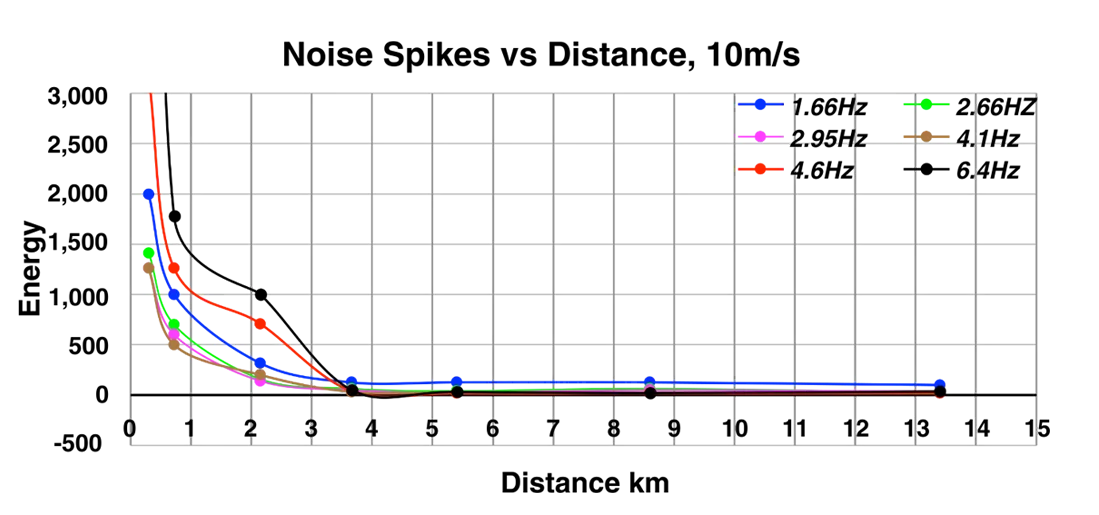
“Peaks identified close to the wind turbines are significantly attenuated with distance and are not reliably detectable at 8.6 km.”

Prof. Dr. Marco Bohnhoff

“There is no indication that the wind farm in question causes any detectable noise in the frequency band 2–8 Hz at the Eskdalemuir Array.”

Professor Michael Kendall

“Deploying broadband seismometers in boreholes of 100 m depth or greater would improve Eskdalemuir’s performance and, with appropriate care, enable the development of a nearby onshore wind farm.”

Dr. Peggy Hellweg

“Deployment of seismometers in boreholes clearly reduces seismic noise compared with instruments installed at the surface.”

Q & A – Eskdalemuir Borehole Mitigation

An overview of the proposed borehole mitigation for the Eskdalemuir seismic array, explaining why it is needed, how it will work, and how it enables future onshore wind development while protecting the monitoring station.

1. Why is a permanent mitigation solution for the Eskdalemuir Array necessary?

The Eskdalemuir Array is a CTBTO/IMS auxiliary station which has presented a barrier to onshore wind development in most of Southern Scotland for over 20 years. In 2005, AWE proposed a small noise budget of 0.336nm for onshore wind developments, which has now been consumed by the planning pipeline. As such, it is now necessary to implement a permanent and enduring mitigation solution which provides long-term protection for the Eskdalemuir Array whilst simultaneously releasing the full economic wind development potential of this strategic area of Southern Scotland and Northern England.

2. How was the design developed?

3. Who will pay for it?

4. How long will it take?

5. What if the boreholes have problems?

6. Who will provide the technology?

7. How will it be integrated into the IMS?

8. Has this been done by the IMS before?

9. Are there any other precedents worldwide?

10. Have any other seismologists reviewed these proposals?

11. Which windfarms will be able to benefit from it?

12. How many MW will it release?

13. What will be required in terms of the UK wind farm consenting process?

14. What will the turbine suppliers have to warrant?

15. What will the MOD have to sign off post wind farm construction?

16. What is the opportunity cost of not adopting this approach?

17. What if it doesn’t work?

Get In Touch

We are committed to working closely with local communities, landowners, and all stakeholders in relation to our renewable energy developments. If you would like further information or have an enquiry, please get in touch.